This is not a legal detail. It is a democratic fault line. When one attempts to impose inseparable packages mixing unrelated subjects on the people, one does not simplify – one constrains. Behind the technical veneer, it is a fundamental principle that falters: the one that guarantees that every citizen votes freely, in good conscience, on a clear issue. And if this lock fails, the entire mechanism of direct democracy breaks down.
Swiss direct democracy is not just about voting. It is based on a fundamental requirement: clarity. Clarity of the question asked, fairness of the process, and above all, strict adherence to the principle of’uniqueness of matter. This principle is not a technical detail. It is the constitutional safeguard that prevents any manipulation of the people.
And today, that lock is about to break.
The uniqueness of matter: a pillar of the popular will
Registered in Swiss constitutional practice and explicitly recognised at the’Article 139 of the Swiss Federal Constitution, the principle of unity of matter imposes a simple rule:
An item submitted to the public must be on a single, coherent subject.
Why? To avoid what lawyers call the linked vote to force a citizen to accept an item that they reject in order to obtain another that they support.
The Swiss Federal Tribunal has recalled this on several occasions:
«The unity of matter aims to guarantee the free formation of the popular will.»
In other words: no institutional blackmail. No indivisible package. No democratic trap.
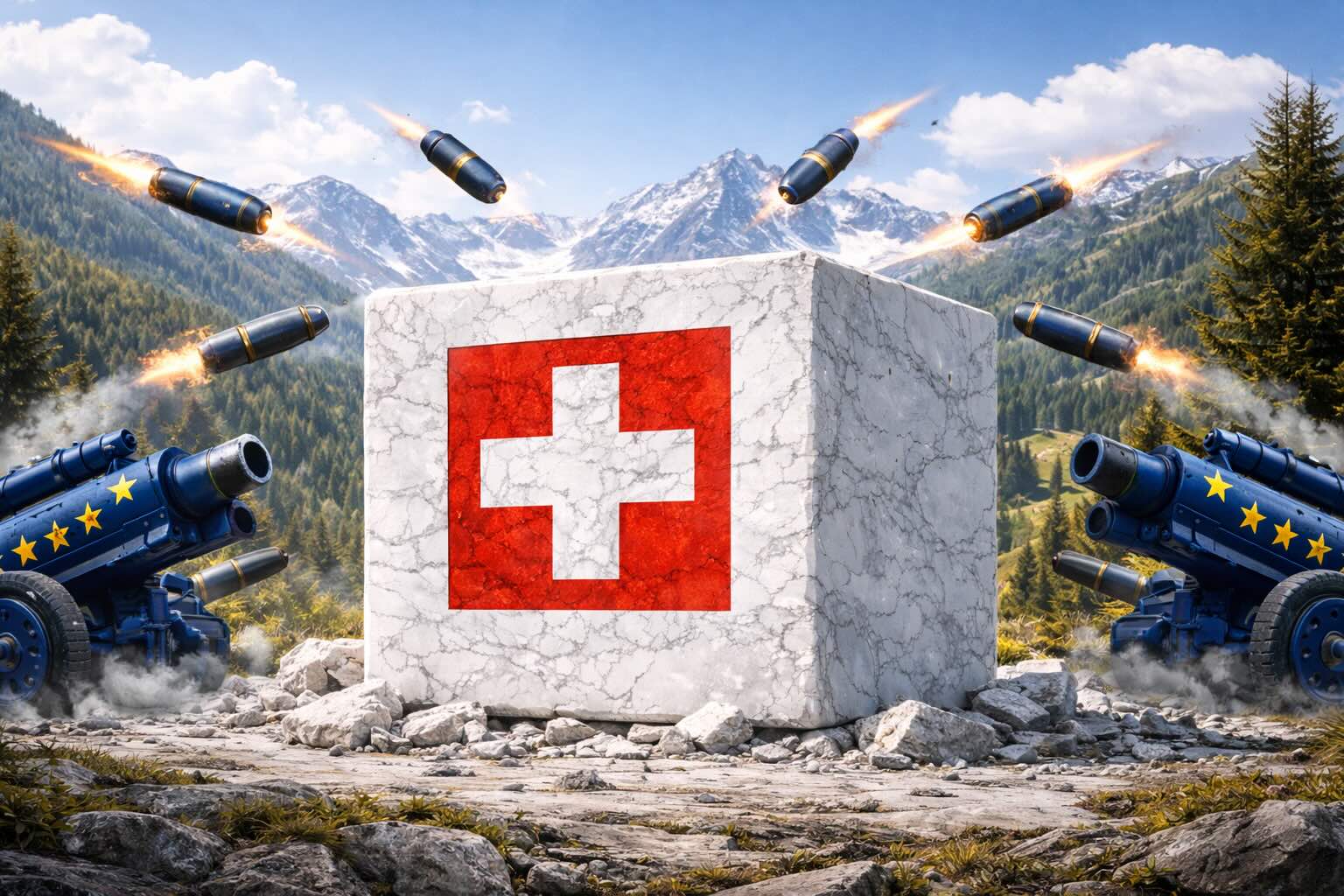
⚠️ EU Framework Agreements and Packages: A Manifest Violation
The draft institutional agreements with the EU – whether called «Bilateral III» or otherwise – are precisely based on what the Constitution prohibits:
⮕ A stack of heterogeneous domains
⮕ A dynamic re-examination of foreign law
⮕ External arbitration mechanisms
⮕ Major societal implications (immigration, labour law, energy, etc.)
All of that... in one package.
It's the exact opposite of the unity of matter.
The Swiss people are asked to vote. en bloc on profoundly different, sometimes contradictory elements in their effects. Refusing one aspect would mean rejecting the whole. Accepting an economic component would mean validating a major institutional transformation.
It's no longer a vote. It's a constraint.
An unconstitutional drift
By circumventing the uniqueness of matter, these agreements violate not only the spirit, but also the letter of the Constitution.
The principle is clear:
The people must be able to have their say freely, knowingly, without manipulation.
Or here:
- Complexity hinders real understanding
- The package prevents differentiated choice
- Legal dependency reduces future sovereignty
This is a triple break.
Even worse: the dynamic re-enactment of European law would gradually erode its substance.
But what's the point of voting... if the rules are already set elsewhere?
Towards the silent end of direct democracy?
What's at stake goes far beyond an economic agreement.
This is a regime change:
From a system where the people decide
To a system where it ratifies
From an active sovereignty
To a normative dependency
Once the mechanism is triggered, every development in European law will be binding – without a vote, without debate, without appeal.
Direct democracy will not be abolished head-on.
She will simply be... bypassed.
Conclusion
A free people do not vote under duress. A Constitution is not circumvented by a package deal.
By violating the principle of the singularity of matter, these agreements reveal their true nature: not a balanced partnership, but a progressive transfer of sovereignty, disguised as stability.
Switzerland has never been as prosperous as when it decided for itself.
To renounce this fundamental right, even partially, is not to evolve.
It's an abdication.