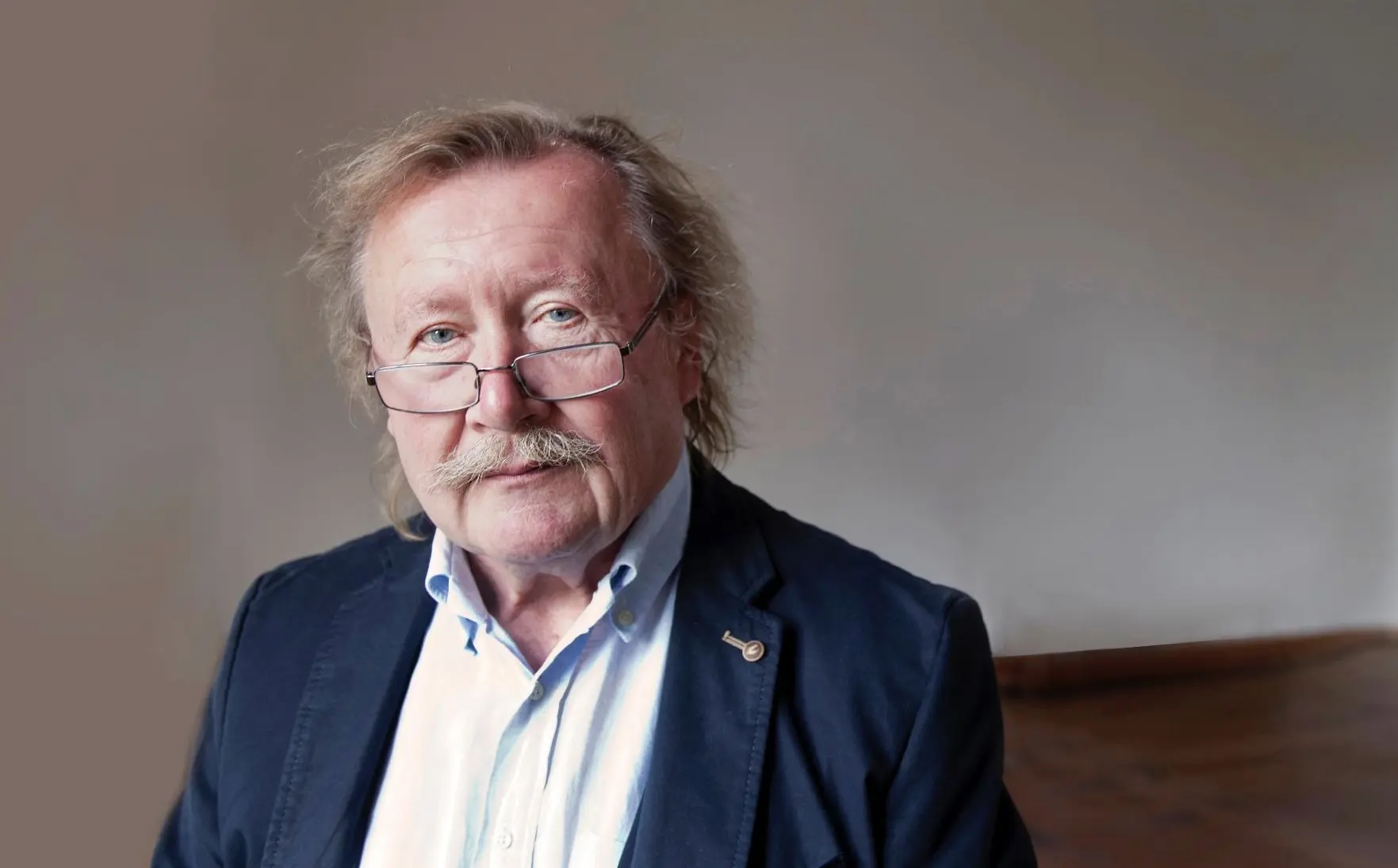
What if Switzerland isn't an anomaly... but a model that Europe fears? When a leading German philosopher dismantles, with cool lucidity, the democratic illusions of the European Union to better celebrate Swiss vitality, the observation becomes impossible to ignore. Against the grain of official discourse, Peter Sloterdijk reminds us of a disturbing truth: Switzerland is not a case to be corrected, but living proof that another political path works.
There are truths that are more unsettling when they come from outside. And when they are articulated by a leading German intellectual, they become difficult to dispute. In an interview given to the NZZ On 29 March 2026, Peter Sloterdijk, an internationally renowned German philosopher and former rector of the University of Karlsruhe, delivered an analysis that was as lucid as it was formidable: Switzerland embodies a democratic anomaly... and it is precisely for this reason that it must be protected.
A living democracy, not an institutional facade
Sloterdijk hits you right from the start:
«Swiss direct democracy is a thorn in the side of representative democracies.»
Far from being a folkloric curiosity, Swiss democracy constitutes a permanent challenge to the dominant European model. Where citizens elsewhere delegate, in Switzerland they decide. Where politics is professionalised elsewhere, here it remains shared.
He goes even further, describing a fundamental principle that is often ignored:
«The fact that the common good and self-interest tend to coincide is a fundamental principle of the Swiss Confederation.»
In other words, Switzerland is not based on an opposition between the people and the elites, but on integrated collective responsibility. A logic that the European Union is struggling to grasp.
Switzerland: A permanent democratic «building site»
Unlike democracies stuck in electoral cycles, Switzerland lives in a continuous process:
«When Swiss citizens are called to the polls, they continue to work on building their state.»
Sloterdijk describes a central idea here: voting is not a punctual act, but active participation in a «permanent construction site». Each vote is a stone added to the national edifice.
He insists on a key point:
«One thing is not permitted: interrupting this process.»
This is precisely what supranational integration mechanisms risk: substituting a technocratic logic for popular dynamics.
An anomaly that is troubling European elites
The philosopher illuminates a rarely-spoken truth:
«Almost everywhere else, politicians fear the people.»
Switzerland is an exception. Not because the people would be docile, but because the system prevents the formation of a political class cut off from them.
He draws a clear conclusion from this:
«Switzerland is a permanent, peaceful revolution.»
This dynamic stability contrasts with what he implicitly describes as European rigidity.
The European illusion of democracy laid bare
Sloterdijk does not spare his criticism of the EU:
«Without the Swiss exception, Europe would sink further into the cynicism of its democratic charade.»
The word is strong: masquerade. It denotes a formal democracy, stripped of its substance, where major decisions are beyond the control of citizens.
And above all, it dismantles Brussels' central mantra:
«There is no alternative.»
Switzerland is proving exactly the opposite. It is living proof that another model works - and works better.
A fundamental incompatibility with the European Union
The conclusion is undeniable:
«The EU and Switzerland will never agree on the definition of sovereignty.»
On the one hand, popular sovereignty exercised directly. On the other hand, sovereignty diluted within supranational structures.
Sloterdijk, en garde:
«It would be fatal to integrate Switzerland into the EU's utopian approach.»
The word «fatal» is not insignificant. It means loss of essence, dilution, progressive disappearance of the Swiss model within a whole that does not understand it.
Swiss sovereignty: a reality, not a slogan
Last point, and arguably the most decisive:
«The Swiss are the only Europeans for whom popular sovereignty has not remained an empty phrase.»
That's all there is to it.
Where elsewhere sovereignty is invoked, in Switzerland it is practised. Where elsewhere it is symbolic, here it is operational.
And Sloterdijk concludes with a formula as provocative as it is accurate:
«Addiction to submission is not among the Swiss pathologies.»
Conclusion – Defending the exception, preserving freedom 🇨🇭
What Peter Sloterdijk reminds us of with the detachment of an external observer is an obvious fact that some in Switzerland seem to have forgotten: our model is not an anomaly to be corrected, but a richness to be protected.
Switzerland is not behind Europe.
She's early.
And that is precisely why it is disturbing.
Preserving Swiss exceptionalism is not about rejecting the world.
It is refusing to give up on what works.
Because one thing is for sure:
When democracy becomes a facade, freedom becomes an illusion.
Switzerland, for its part, remains living proof that another path is possible.