
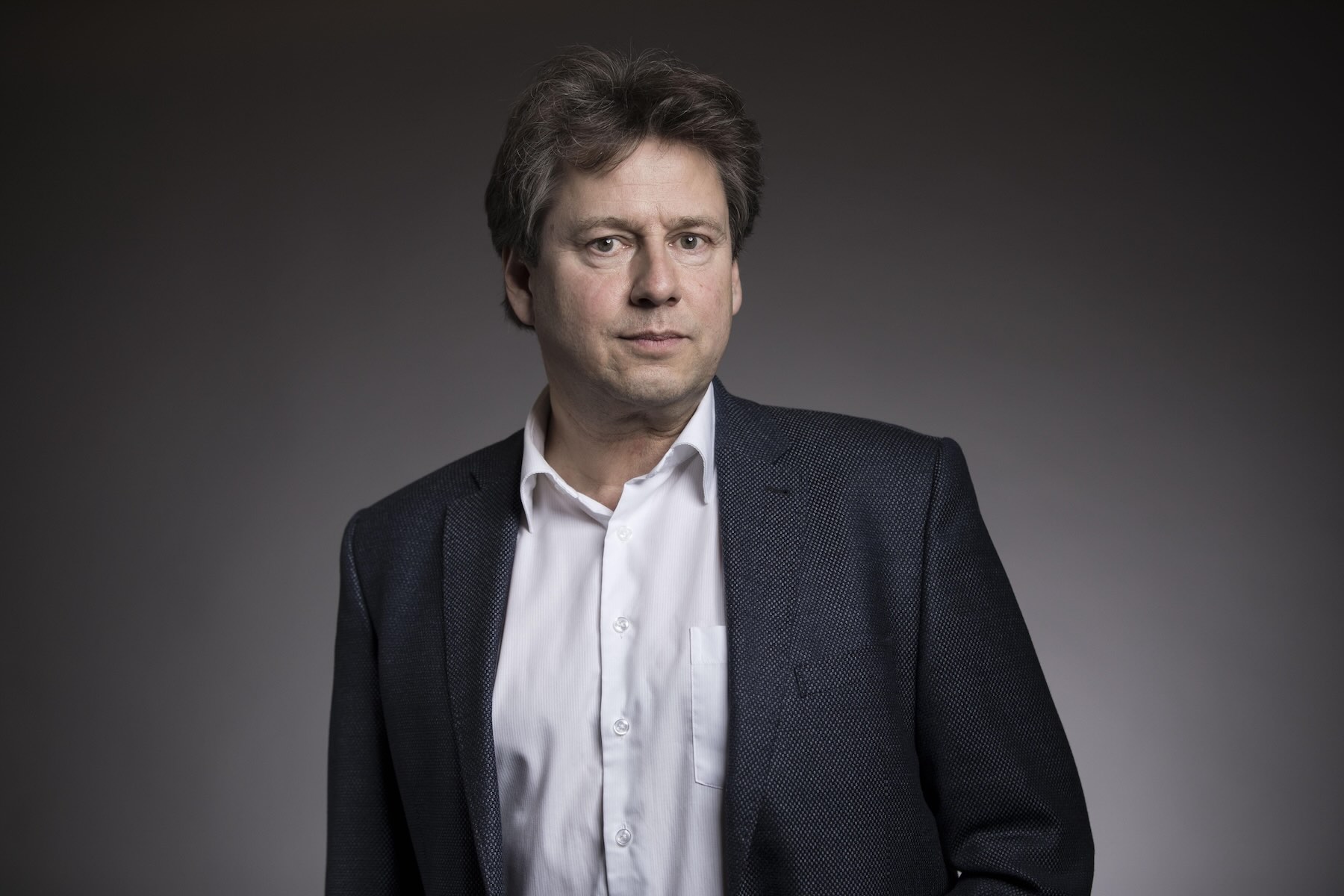
Going against the prevailing narrative of the lobbies and the Federal Council, Reiner Eichenberger breaks a taboo: free movement of people is not an engine of prosperity, but a system whose costs are largely concealed. Behind the flattering.
In an interview with L'Agefi (31 March 2026), liberal economist Reiner Eichenberger delivers a frontal critique of a pillar of Swiss policy: the free movement of people.
Her thesis is unambiguous: it would cost Switzerland more than it brings in.
Growth that enriches the system… but not the citizens
Eichenberger questions a central dogma: more population = more prosperity.
He distinguishes between two economic realities:
- Total GDP (which increases with population)
- GDP per capita (which actually reflects the standard of living)
Key figures mentioned:
- +0.64%/an GDP per capita growth in Switzerland (2007–2023)
- But only 0.39% if cross-border commuters are excluded
- Less than the eurozone (0.57%)
Strong citation:
«The average citizen lives off GDP per capita, but certain elites live off total GDP.»
The population growth mainly benefits structures (administrations, large companies), not necessarily the population.
The real blind spot: invisible costs
One of Eichenberger's major contributions here is:
The costs of free movement are massive… but largely unmeasured.
He points:
- Saturation of infrastructure (roads, schools, energy)
- Housing pressure
- environmental externalities
- public overhead costs
Key citation:
«Across more than 1,000 pages of the Federal Council's message, there are no figures on the costs.»
A direct critique of the current political debate: We measure the profits, we ignore the costs.
Immigration and the labour market: a counterproductive mechanism?
Contrary to the prevailing discourse, Eichenberger states that:
Immigration doesn't eliminate shortages... it displaces them.
- She is avoiding the pay rises.
- It hinders productivity gains
- It artificially maintains certain inefficient economic models.
Citation :
«Importing labour prevents the market from playing its role.»
Another structural effect:
- The Swiss are heading towards protected jobs (administration, law)
- Growing sectoral imbalance
A radical proposal: «internalise the costs»
Rather than quotas, Eichenberger proposes a liberal approach:
Price immigration
In concrete terms :
- a form of «tourist tax»
- incorporating real costs (infrastructure, housing, environment)
Talking picture:
«A good hotel welcomes its guests... but not for free.»
Objective:
- to make the system accountable
- select qualitatively rather than quantitatively
- restore a market logic
Further analysis: what this really changes
His reasoning fits a coherent economic logic:
1. Uninternalised externalities
Classic case: when a cost is not paid by the one who generates it → inefficiency
2. Market signal distortion
«Free» immigration = false price → misallocation of resources
3. Biased political arbitrage
Decision-makers benefit from population growth
The citizens are feeling the effects (housing, congestion, pressure)
A challenge to the political consensus
Eichenberger goes further by attacking a widely held idea:
Free movement as a liberal value.
Citation :
«Free access to the fruits of a country's labour is a communist idea.»
An intellectual provocation that forces one to rethink:
- economic sovereignty
- fairness of systems
- limits of openness
Conclusion — the real debate begins now
Reiner Eichenberger's analysis has the merit of raising a fundamental question:
And what if the problem wasn't immigration itself... but its lack of price?
In a country with strong attractiveness like Switzerland, ignoring the costs is tantamount to organising saturation.
As the 14 June vote approaches, one question arises:
How much does freedom of movement really cost – and who is footing the bill?