
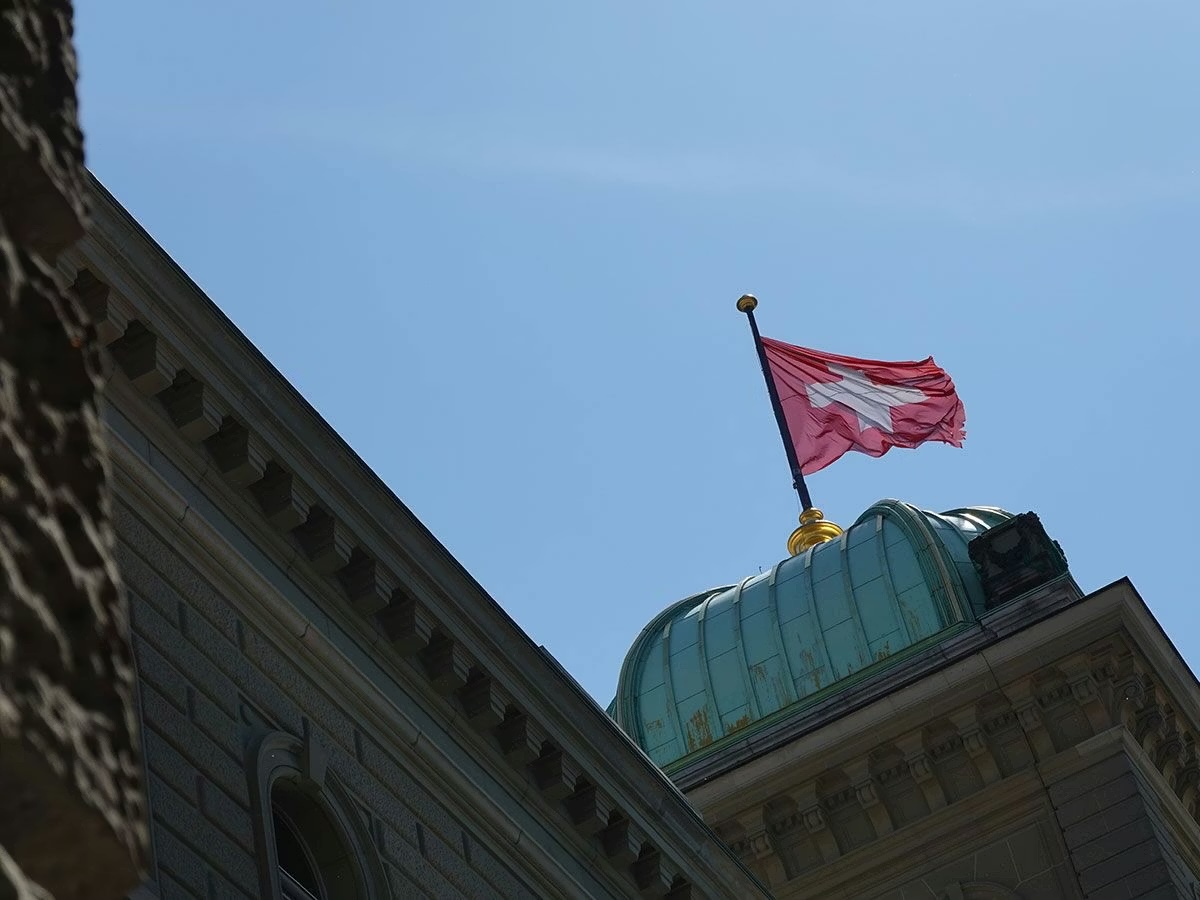
What if, under the guise of «modernising» our security, we were actually weakening one of Switzerland's fundamental pillars? The Security Policy Strategy 2026 opens up a crucial debate: that of the gradual erosion of our neutrality. Behind the technocratic words lies a silent transformation of Swiss doctrine, where geopolitical pressures, industrial interests and political activism could redefine the country's strategic independence. A development that deserves to be examined without naivety.
The publication of the Switzerland's security policy strategy 2026 marks a major turning point in the official discourse on national security. Behind a technocratic vocabulary - «resilience», «cooperation», «interconnection of security systems» - a more profound development is taking shape: the gradual trivialisation of the erosion of Swiss neutrality. Swiss neutrality is not an archaism. It is one of the historical pillars of Switzerland's stability, diplomatic credibility and strategic independence.
The Federal Council's report states that Switzerland must «contribute more to European security» and develop its military cooperation with foreign partners. It also points out that the refusal to re-export arms to Ukraine has led to the exclusion of certain Swiss companies from European military programmes and supply chains. In other words, neutrality is now presented as an economic obstacle. This formulation is revealing: security policy is gradually being reconfigured around industrial interests and block logics.
The source is self-explanatory: «A first consequence is the exclusion of the Swiss armaments industry from many foreign tenders and supply chains».» (Sicherheitspolitische Strategie der Schweiz 2026, consultation draft, Federal Council, 12 December 2025). Behind this observation lies a growing pressure to adapt neutrality in order to remain integrated in the European armaments market.
But is it really necessary to redefine a country's strategic identity in order to satisfy the needs of an industrial sector? US President Dwight D. Eisenhower warned as long ago as 1961: «We must guard against the unwarranted influence of the military-industrial complex.» This warning remains strikingly topical. When security policy becomes dependent on industrial interests or economic alliances, there is a risk of transforming national security into an instrument of geopolitical integration.
Swiss neutrality is not a passive posture. It is an active foreign policy tool that has enabled Switzerland to offer its good offices, host international negotiations and maintain a unique diplomatic credibility. As the historian and diplomat Edgar Bonjour reminds us : «Neutrality is not a refuge for weakness, but a strategy for preserving independence.»
Yet some politicians seem to regard this independence as a relic of the past. The activism of Federal Councillor Ignazio Cassis, who regularly favours closer alignment with the European Union, and that of Martin Pfister, a fervent promoter of greater security integration with European structures, illustrate this drift. Under the guise of «strategic realism», these positions are gradually diluting the very foundations of Swiss foreign policy.
The central question is simple: should Switzerland adapt its neutrality to meet the expectations of its military partners and industrial interests, or should it preserve what makes it unique and strong? In a world of blocs and growing rivalries, Swiss neutrality is precisely a strategic alternative. It enables us to maintain channels of dialogue where others choose to align.
A country's security is not just measured by the number of weapons it has or the extent of its military cooperation. It is also measured by its ability to remain sovereign in its choices. Switzerland has never been strong when it followed the great powers; it has been strong when it charted its own course.
Conclusion
The Security Strategy 2026 opens up a fundamental debate: do we want an independent Switzerland, capable of dialogue with everyone and defending its neutrality, or a Switzerland that is progressively integrated into the logic of military blocs and arms markets? Neutrality is not an obstacle to security. It is one of the last bastions of our sovereignty. And it is precisely for this reason that it upsets those who prefer alignment to independence.