
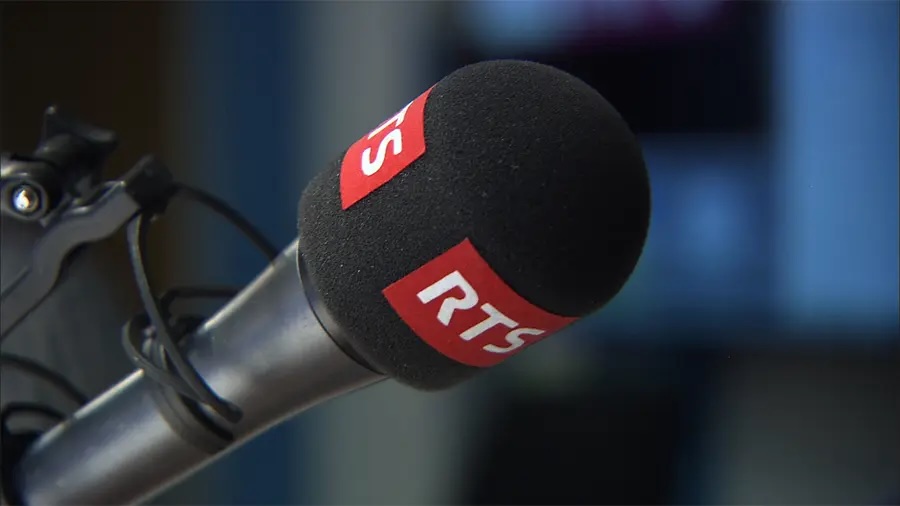
The licence fee is no longer a form of financing: it is a power struggle. Every household and every company pays not to be informed, but to maintain a media system that no longer depends on the public. What we are funding today is not the freedom to inform, but the comfort of an official narrative that has become untouchable.
Switzerland did not wait for the licence fee to be introduced before being informed.
Before compulsory levies, the media existed, investigated and criticised. They relied on something simple and demanding: public trust.
This model was abandoned. Not because it no longer worked, but because it no longer guaranteed control.
From information to standardisation
Today, a large part of the Swiss media landscape no longer informs: it homogenises.
Same hierarchy of subjects.
Same tone.
Same vocabulary.
Same conclusions.
It's not a coincidence, it's a mechanism.
When funding is guaranteed, risk disappears. When risk disappears, so does pluralism. All that remains is a «safe», compatible discourse, validated by the priorities of the federal bureaucracy and its ideological relays.
We no longer talk to the public.
They frame.
The public pulls out - and rightly so
The figures speak for themselves:
unsubscribing, losing interest, growing mistrust. The Swiss are not deserting information - they're deserting it. this information.
In a normal economy, a product that no longer finds its audience either adapts... or disappears.
In the subsidised economy, it survives on a drip, forcibly paid for by the very people who turn their backs on it.
This is a democratic anomaly.
Why finance entertainment?
There is no reason why households and businesses should be funding entertainment programmes, formatted talk shows and flat debates where everything is predictable from the first five minutes.
Anyone who wants a show has to pay for a season ticket.
Those who want to be entertained pay for their leisure time.
Public money is not intended to produce televisual comfort, still less to recycle the same faces and the same speeches indefinitely.
A fee designed to regulate, not inform
In many Western countries, the audiovisual licence fee was not born out of popular demand, but out of the will of the elite: securing the narrative, neutralise the competition and stabilise the message.
It's a tool of gentle social engineering:
You don't force it, you get used to it; ;
we don't censor, we dilute; ;
you don't persuade, you repeat.
And the citizen himself pays for the system that supports him.
A caste protected by public money
This licence fee sustains a closed ecosystem: the same experts, the same editorialists, the same platforms. A media caste that no longer depends on the public for its livelihood. against its withdrawal, because it no longer depends on them.
It defends the licence fee not for democratic reasons, but because survival instinct.
«He who no longer depends on his audience no longer needs to respect them.»
Conclusion - 8 March, a clear choice
On 8 March 2026, the Swiss people will not be voting on an amount.
It votes on a principle.
The cap at CHF 200.00 is not an end in itself.
It's a signal.
A reminder that this deduction is neither natural, intangible nor eternal.
Reducing licence fees is a minimum.
Removing it would be an act of sovereignty.
To inform, yes.
To frame minds, no.
Paying to be formatted: never.
On 8 March 2026, let's vote YES.
Not because they want to join the system, but to remind them that it's no longer out of reach.
🇨🇭 Without funding, there can be no resistance. Support Swiss Sovereignty now: https://souverainete-suisse.ch/faire-un-don/
We analyse what the media keep quiet. What Berne negotiates, we dissect. Join our HQ on Telegram now: https://t.me/swisssovereignty