
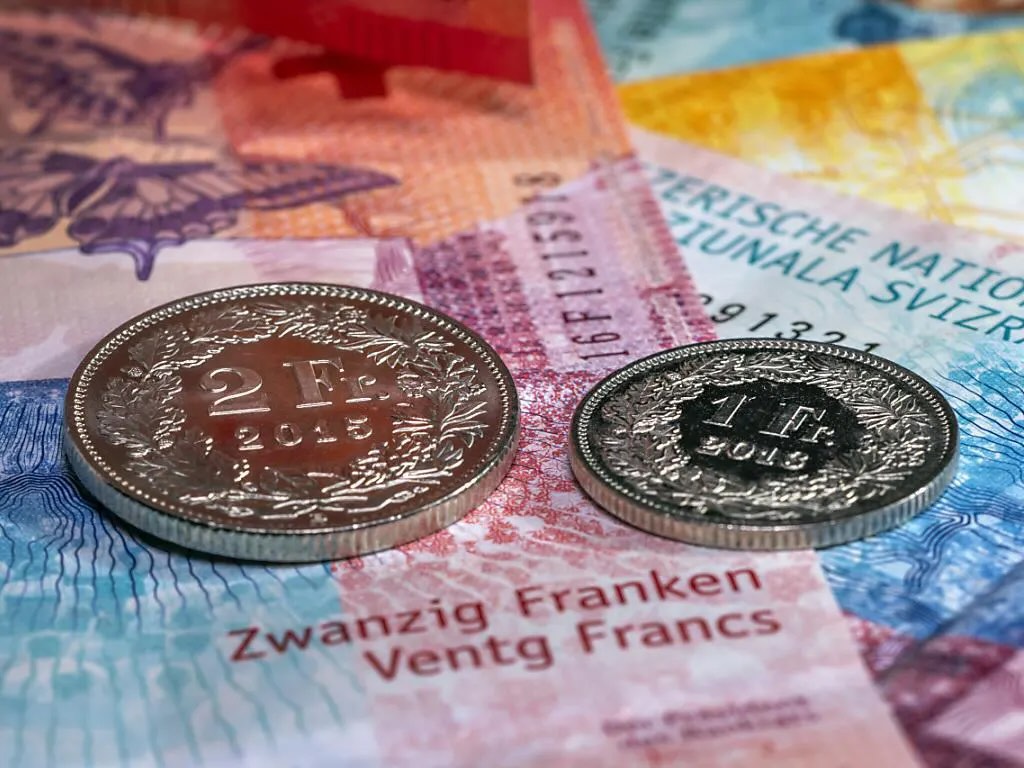
We are being told that defending cash is an archaic, pointless, almost dangerous fad. In reality, this discourse reveals above all the muted panic of a financial community that is no longer used to being questioned. When editorial writers explain to the sovereign that «the problem doesn't exist», it's not a question of education, but of a defensive reflex: to prevent the debate before it reaches the heart of the system. On 8 March, it's not cash that's on trial - it's the people's right to set limits on a financial system that claims to be independent yet escapes all control.
The editorial of the’AGEFI entitled «Cash: the wrong solution to a non-existent problem» is a textbook case.
Not economic education, but reflexive defence of a financial system that refuses all democratic control.
Point-by-point dismantling.
1 «The problem doesn't exist» - really?
To claim that the risk of cash disappearing is a fiction is either naïve or dishonest.
Restrictions on access to ATMs, withdrawal limits, ATM closures, total dependence on electricity and networks : the facts are documented, daily and measurable.
Enshrining cash in the Constitution is not about «fear-mongering»:
⮕ it's locking in a fundamental right before it is stripped of its substance.
2. The sacred myth of the SNB's independence«
This is where the editorial becomes ideological.
La Swiss National Bank be independent?
Independent of whom? Certainly not the international financial markets.
A few facts that AGEFI carefully avoids:
-
The SNB holds hundreds of billions in foreign financial assets, most of which are denominated in dollars.
-
It is structurally exposed to the decisions of the US Federal Reserve.
-
It operates in an ecosystem dominated by Wall Street, not by Swiss citizens.
⮕ A central bank that overinvests in foreign equity and bond markets is not «independent»: it is intertwined.
3. Monetary digitisation: the strategic unspoken
In a world where payments are rapidly going digital and central bank digital currency projects are emerging everywhere, the issue is not technological but institutional. A digital currency can be a tool - it becomes a problem as soon as it no longer has a counterweight. Without guaranteed cash, all payments become conditional: on electricity, on networks, on rules imposed from above. Including cash in the Constitution is not about refusing innovation, it's about preventing it from turning into total dependency.. Monetary pluralism is not an archaism: it is an assurance of freedom.
4. Confederation = trusteeship? False equation
AGEFI deliberately equates the constitutional guarantee of cash with «political trusteeship».
This is complete nonsense.
The initiative does not dictate interest rates or monetary policy.
It imposes only one thing: that the Confederation guarantees the availability of banknotes and coins at all times and in sufficient quantities.
This is a safeguard clause, not a takeover.
5. Fed-White House comparison: diversion
The American example brandished in the editorial is a rhetorical manoeuvre.
Switzerland is not the United States. Its institutional framework, mandate and monetary history are in no way comparable.
Importing this conflict to frighten people is tantamount to replacing analysis with arguments from authority.
6. Who's really afraid of debate?
The virulence against this initiative reveals something else:
⮕ the fear that citizens will finally be able to get their noses into the monetary mechanisms.
Cash:
-
limits total traceability,
-
prevents full control of flows,
-
protects privacy,
-
guarantees resilience in the event of a crisis.
All that the financial system does not like.
Conclusion: 8 March is not a technical vote
It's a vote of principle.
For freedom of payment.
For resilience.
For real sovereignty - not the sovereignty of balance sheets and editorials.
Including cash in the Constitution will not weaken Switzerland.
It means protecting it against those who claim to know better than the people what is “good” for them.
On 8 March, let's vote YES, that's clear. 🇨🇭
Relevant analysis? Like, share and republish now.