Switzerland-EU Debate: Women on the ground denounce democratic drift and question the future of direct democracy in the face of decisions distant from the people.
24 April 2026
What if the real turning point in the debate on the new Swiss-EU agreements doesn't come from the political parties or the lobbies... but from women who refuse to be silent? Behind a carefully maintained facade of consensus, a voice is rising – calm, determined, independent – and it's unsettling. Because it asks the only question that matters: what is left of our democracy if we give up its levers?
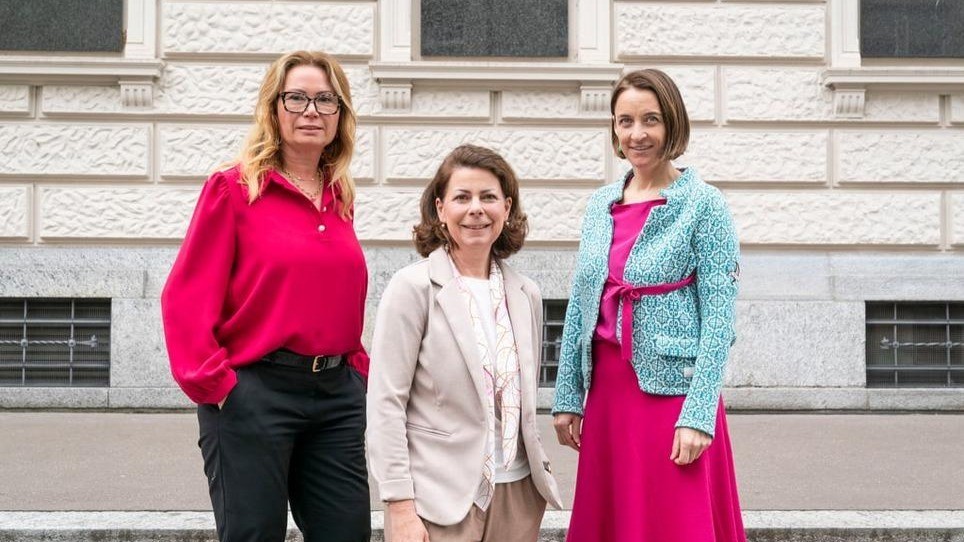
In a society where European debate is too often bogged down among experts, technocrats and economic interests, an unexpected movement is emerging. According to Aargauer Zeitung (18 April 2026), several women from various professional backgrounds – entrepreneurs, lawyers, elected officials – have decided to publicly oppose the new institutional agreements with the European Union.
Among them are: Sara Hürlimann, a health entrepreneur; Karin Faes (FDP/PLR), active in construction; and Phyllis Scholl, a lawyer and mayor of Kilchberg. Their approach stands in stark contrast to the usual caricatures. They claim neither party affiliation nor ideological posturing. They claim a fundamental right: to understand, debate, and decide.
Their conclusion is crystal clear:
«Look at the texts of the treaties. (...) It's not simply about pursuing a bilateral approach. These new treaties are a break.» (Aargauer Zeitung, 18 April 2026)
A breakup. The word is strong, and it's acknowledged.
A widely shared, but silent, intuition
What is striking about their testimony is not just their position — it is what it reveals:
«I've noticed that many women instinctively reject new treaties, but they don't dare to say so.»
Why this silence?
Because today, saying no is no longer neutral.
Because refusing these agreements means immediately being catalogued, disqualified, marginalised.
«It is more “socially acceptable” to be in favour of it. (...) And you are quickly labelled as a »loony' as soon as you say no.»
The debate is thus biased from the outset: adherence is valued, doubt is suspect.
Behind the words: a question of power
These women are not talking about legal technicalities. They are talking about democratic sovereignty.
«Our mothers fought for the right to vote; we do not want to restrict it.»
The parallel is striking. Where some see only mechanisms of harmonisation, they perceive a deeper dynamic: a progressive dilution of popular power.
«These are institutional links – and, ultimately, about power, or rather, powerlessness.»
Because the heart of the problem is there.
In the European Union, citizens vote every four or five years. In Switzerland, they vote several times a year on concrete, specific, decisive issues.
«Look: the populations of our neighbouring countries feel powerless. (…) In Switzerland, we hold several referendums every year.»
This unique model – envied, sometimes criticised – rests on an essential condition: mastery of the law.
Or, any automatic adoption of external standards mechanically weakens this control.
A critique born of experience, not ideology
One of the most striking testimonies comes from an entrepreneur of Swedish origin:
«I come from Sweden, and I observed there the effects of too much involvement beyond its borders.»
This external perspective is valuable. It does not fantasise about Europe; it observes its concrete limitations.
These women are not rejecting cooperation. They are rejecting an integration that does not declare itself as such.
Independence and courage: the real fault lines
Their initiative, baptised «HerVoice», aims to be independent.
Yes, they recognise affinities with certain critical circles — such as Autonomiesuisse or Kompass Europa — but they insist on their autonomy.
«These groups do not dictate our conduct or our topics.»
Why this insistence?
Because the credibility of the debate rests on freedom of speech.
And because, deep down, the divide is no longer between left and right.
It's between conformity and courage.
«It takes more courage to say no to these agreements than to say yes.»
Conclusion
What is at stake today goes far beyond the content of a few treaties.
It is a silent battle for a people's ability to remain masters of their choices.
These women impose nothing. They are breaking through.
They recall an obvious truth that many prefer to forget: democracy never disappears all at once – it erodes, article by article, norm by norm.
Their message is simple, almost disturbingly clear:
Read, understand... then decide.
For in the end, only one question remains:
Do we still want to be a people who vote – or a people who endure?
Did this analysis resonate with you? Like and share to help us reach a wider audience.
What the media keeps silent about, we analyse. What Bern negotiates, we dissect. https://souverainete-suisse.ch/
We are the Guardians of Independence. Join the Swiss Sovereignty Movement. Not tomorrow. Not later - now.